Dr. Martin Lochner

Research Associate | Security Data Analyst | Coordinator

Multimodal Cognitive Processing | Human Centered Design | Trust in Autonomous Systems

Department of Psychology, University of Waterloo

RESEARCH PROJECTS
COURSES
CURRICULUM VITAE

Note: I also assisted with UX and data side for latest eSentire Labs product release:

Managed Detection and Response for Large Language Models, e.g., :

https://finance.yahoo.com/news/esentire-leads-industry-launch-first-130000504.html

Recent Project Updates

LLM / Security Operations Topic Modeller - 2024

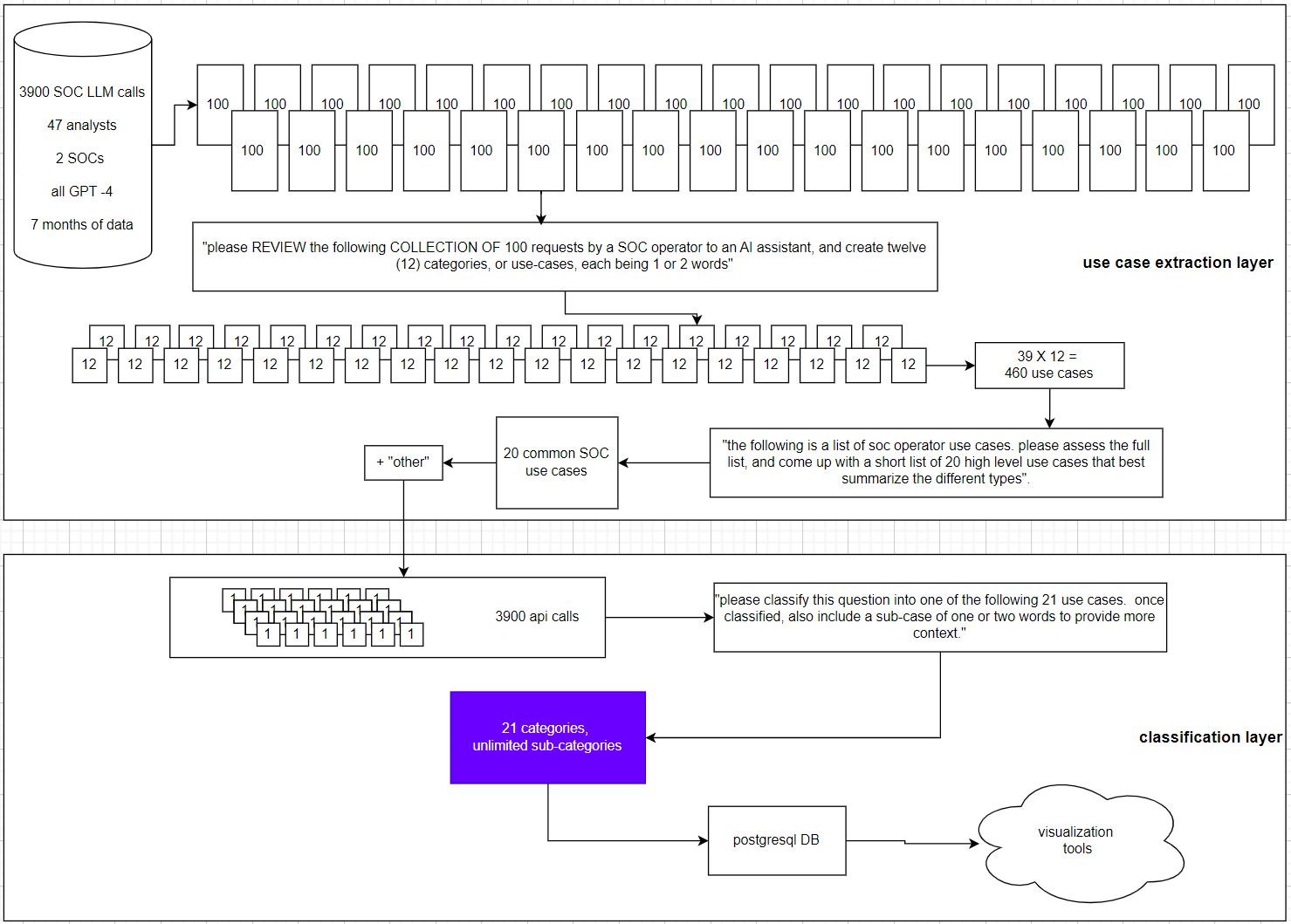
This project involves a novel implementation of python and an internally deployed LLM.  We recursively scanned 3900 instances of SOC operators employing GPT-4 to ask questions during live security operations.  Two stages of data processing were carried out.  (1) Use case extraction, where the full set was analyzed to understand common use cases., and (2) classification, assigning each of the 3900 calls to one of the use-cases.  This topic modelling (publication in progress) allows us to prioritize design work to support SOC operators, e.g.. with custom tooling to support common use cases.

This diagram shows two levels of data processing, performed on Security Operations Centre interactions with GPT-4 during active security investigations... please contact for pre-print!

LLM Coding Assistant - 2023

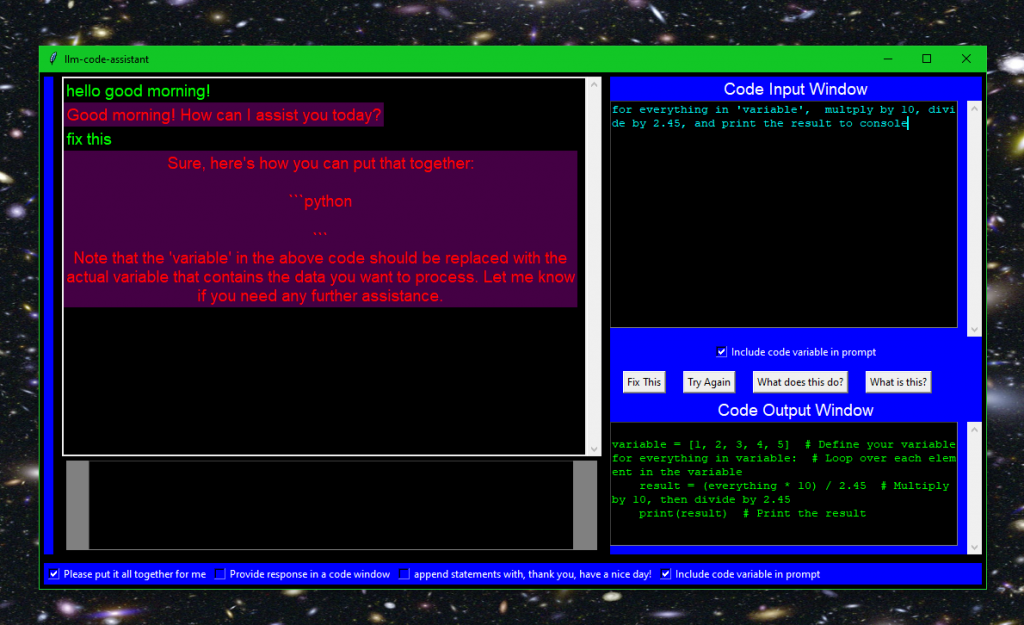
This project leverages my recent LLM topic modellng exercise, above.  Use cases were extracted from common LLM calls, and the content was used to prioritize design decisions for a 6-person Dev team.  This was one of the designs that came out of that exercise.  Note novel functionality.  This preceeded similar commercial applications by two years. 

-ability to extract code from LLM response using tags
-simple plain-text –> code extraction interface
-execute common use cases (e.g., ‘fix this’) using single button click
-GUI to alter system prompt on-the-fly

These features streamline the code troubleshooting process when coding with an LLM.
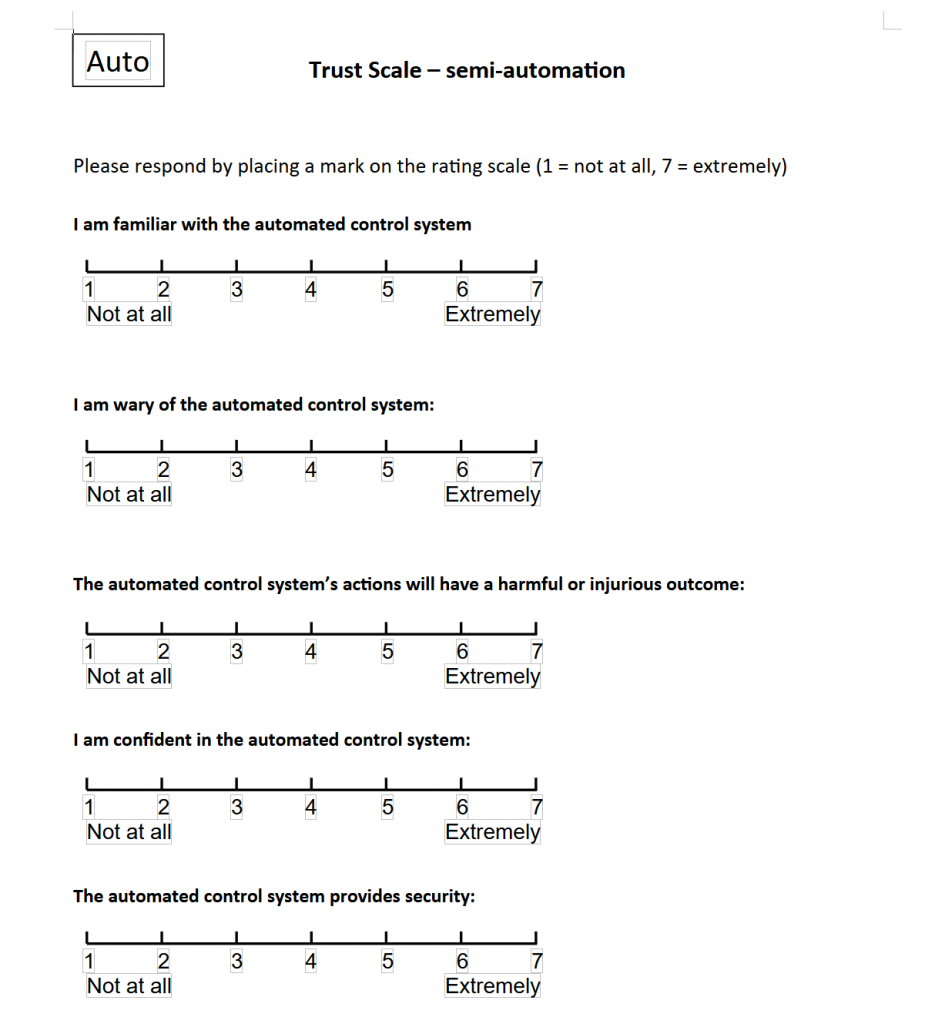
Trust in Neonatal Care Oxygen Control Automation - 2019

This project was conducted with our Automation, Trust and Workload, Collaborative Research Project (CRP), which involved Engineering and Psychology departments at U Tasmania, in collaboration with the Royal Hobart Hospital in Tasmania.  Nurses in a neonatal ICU were tested during a deployment of new automation control systems for oxygen control in the neonatal incubation system.  Instead of manually adjusting oxy levels at a set interval, they inspected the control readout from an automated system, and monitored alarms.  At the end of shift, (so as not to interfere with the operation of the Unit), nurses filled out a modified Trust In Automation scale (e.g., Jiang 2005).  

Thanks for your time in reading this information!    best wishes to you  and kind regards